
More Information
Submitted: November 24, 2025 | Approved: December 03, 2025 | Published: December 04, 2025
How to cite this article: Wong CPF, Ling LN. Effects of Lignosus rhinocerus and Eurycoma longifolia on Aerobic Exercise Performance, Rate of Perceived Exertion and Heart Rate in Young Athletes. J Sports Med Ther. 2025; 10(4): 048-052. Available from:
https://dx.doi.org/10.29328/journal.jsmt.1001097
DOI: 10.29328/journal.jsmt.1001097
Copyright License: © 2025 Wong CPF, et al. This is an open access article distributed under the Creative Commons Attribution License, which permits unrestricted use, distribution, and reproduction in any medium, provided the original work is properly cited.
Keywords: Lignosus rhinocerus; Eurycoma longifolia; Aerobic exercise; Heart rate; Rate perceived of exertion; Ergogenic supplements and young athletes

Effects of Lignosus rhinocerus and Eurycoma longifolia on Aerobic Exercise Performance, Rate of Perceived Exertion and Heart Rate in Young Athletes
Chee Ping Fadzel Wong* and Lau Ngikk Ling
Faculty of Food Science and Nutrition, University Malaysia Sabah, Jalan UMS, 88400 Kota Kinabalu, Sabah, Malaysia
*Address for Correspondence: Chee Ping Fadzel Wong, Faculty of Food Science and Nutrition, University Malaysia Sabah, Jalan UMS, 88400 Kota Kinabalu, Sabah, Malaysia, Email: [email protected]
Ergogenic supplements are widely used by athletes to enhance sports performance, yet scientific evidence supporting their efficacy remains variable. Lignosus rhinocerus and Eurycoma longifolia are traditional herbal supplements purported to improve physical fitness and metabolic function. However, data on their combined effects of Lignosus rhinocerus and Eurycoma longifolia on aerobic performance are scarce. This study aimed to examine the impact of combined supplementation with Lignosus rhinocerus and Eurycoma longifolia on aerobic exercise performance, rate of perceived exertion and heart rate in young male athletes. Eight young male athletes completed a randomised and crossover study, receiving either the supplement combination or a placebo for six consecutive days, with an additional acute dose administered one hour before an aerobic exercise test. Time to complete the aerobic exercise test, rate of perceived exertion and heart rate were recorded during each trial. A one-week washout period separated the two trials to minimise carryover effects. Data were analysed using repeated-measures ANOVA and paired t-tests, and are presented as mean ± SD. This study found that combined supplementation of Lignosus rhinocerus and Eurycoma longifolia had no significant effect on aerobic exercise performance, rate of perceived exertion and heart rate compared with the placebo. Both the rate of perceived exertion and heart rate increased significantly from baseline in all trials, consistent with expected physiological responses to exercise. These findings suggest that six days of supplementation of Lignosus rhinocerus and Eurycoma longifolia, including an acute pre-exercise dose, is insufficient to elicit measurable ergogenic benefits in young athletes. Future research should explore longer supplementation durations and varied dosages to determine potential performance-enhancing effects.
Lignosus rhinoceros has long been used by indigenous communities in Southeast Asia to promote general health and improve physical stamina [1]. In Malaysia, it is commonly known as Cendawan Susu Rimau [2]. The health-promoting properties of Lignosus rhinoceros have been documented, especially about its antioxidant potential [3,4]. Eurycoma longifolia is more widely known as Tongkat Ali or Long Jack. It is a native herbal plant found predominantly in Malaysia, Indonesia and Vietnam [5]. It is often referred to as “Malaysian Ginseng,” and traditionally used as an adaptogen to combat stress, improve vitality and enhance physical strength [6,7]. Eurycoma longifolia has been associated with various therapeutic properties, including aphrodisiac, antimalarial, cytotoxic, antipyretic and anti-ulcer effects [5].
Antioxidants may reduce free radical accumulation, thereby limiting exercise-induced oxidative stress, which is a major contributor to muscle damage and fatigue [8]. Tan, et al. [3] reported that consuming 300 mg of Lignosus rhinocerus twice daily for three months increased total antioxidant capacity by approximately 70%. Fung and Tan [4] observed improvements in stamina, alertness, and respiratory function following a two-week intake of 500 mg of Lignosus rhinoceros. Eurycoma longifolia has been widely promoted for its potential ergogenic effects, particularly relating to hormonal regulation and muscle strength [9]. Talbott, et al. [10] found that 100 mg of Eurycoma longifolia consumed 30 minutes before intense endurance exercise reduced cortisol levels by 32.3% and increased testosterone levels by 16%. This suggests an enhanced anabolic hormonal environment during exercise. Chen, et al. [11] further demonstrated that six weeks of 400 mg/day supplementation increased testosterone without exceeding the IOC-regulated testosterone-to-epitestosterone ratio of 4:1.
Multi-ingredient pre-workout supplements (MIPS) have also grown in popularity for their potential synergistic effects on exercise performance [12]. Despite individual evidence supporting Lignosus rhinocerus and Eurycoma longifolia as performance-enhancing supplements, research on their combined effects, particularly over a short-term supplementation period, has remained limited. It is therefore hypothesised that combining these two supplements may produce synergistic benefits for aerobic exercise performance. Thus, the objective of this study was to determine the effects of combined Lignosus rhinocerus and Eurycoma longifolia supplementation on aerobic exercise performance, rate of perceived exertion and heart rate in young athletes.
Selection of participants
Eight young male athletes aged 19–29 years were recruited through random sampling from the athlete population. Exclusion criteria included hypertension, asthma, diabetes, bronchitis, anaemia, cardiac conditions, kidney or liver disease, and other major medical conditions. The full study protocol was explained to all participants. Participants completed demographic, lifestyle, and medical history questionnaires, as well as the International Physical Activity Questionnaire (IPAQ). Anthropometric measurements were collected during a pre-trial session.
Experimental design
- Supplement trial – daily consumption of 250 mL of water mixed with 5 g of powdered Lignosus rhinocerus and Eurycoma longifolia for six days.
- Placebo trial – daily consumption of 250 mL plain water for six days.
A seven-day washout period separated the two trials, and trial order was randomised.
Preparation of participants
Participants recorded their food intake for three days before the first trial and replicated the same dietary pattern before the second trial to control for variations in muscle glycogen levels. They were also instructed to avoid strenuous physical activity for at least 24 hours before each running test.
Trial procedure
Upon arrival on test day, the resting heart rate was measured. A chest-strap heart rate monitor was fitted to record heart rate continuously throughout the run. Participants consumed either the supplement or the placebo drink one hour before the 2.4 km run. Time to completion aerobic exercise test, rate of perceived exertion and heart rate were recorded before and after each trial.
Statistical analysis
Data were analysed using SPSS version 29.0 (SPSS Inc., United States). All outcomes were expressed as mean ± standard deviation. Repeated-measures ANOVA and paired t-tests were used to identify differences between supplement and placebo trials, with significance set at p < 0.05.
The participants’ body mass index (BMI) and waist-to-hip ratio (WHR) fell within the normal, healthy range (Table 1). These anthropometric values suggest that the participants were generally of normal body composition, with no indications of overweight, obesity, or central adiposity. Maintaining BMI and WHR within recommended ranges is important, as both indicators are commonly used to assess overall fitness level, metabolic health and the risk of developing cardiovascular or obesity-related conditions.
| Table 1: Physical characteristics of the participants. | |
| Physical characteristics of the participants (n = 8) | Mean ± SD |
| Height (cm) | 171.89 ± 4.53 |
| Weight (kg) | 65.30 ± 10.00 |
| BMI (kg/m²) | 22.03 ± 2.79 |
| Waist circumference (cm) | 82.90 ± 5.32 |
| Hip circumference (cm) | 96.97 ± 7.04 |
| Waist-to-hip ratio (WHR) | 0.85 ± 0.31 |
There was no significant difference in the time taken to complete the aerobic exercise test between the supplement and placebo trial (p > 0.05) (Figure 1).
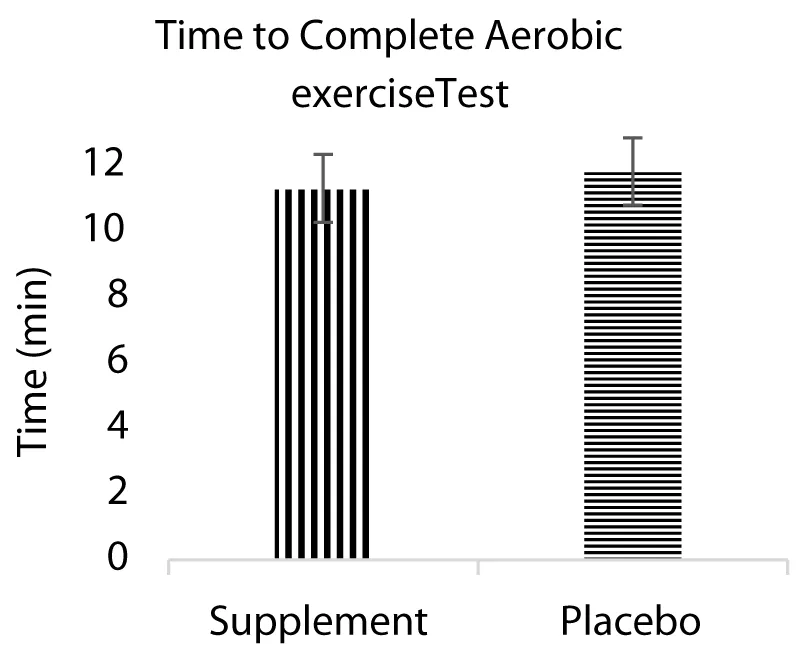
Figure 1: Time to complete the aerobic exercise test in the supplement and placebo trials. Data is presented as mean ± SD.
Heart rate and rate of perceived exertion (RPE) are presented in Figure 2. Both parameters showed significant increases over time within each trial compared with their respective resting values (p < 0.05). However, no significant differences were observed between the two trials for any of these measures. The rise in heart rate during running was consistent with the expected cardiovascular response to dynamic exercise. As running intensity increases, the body must elevate cardiac output and redistribute blood flow to meet the heightened metabolic demand for oxygen and nutrients in the working skeletal muscles, enabling the continuous production of adenosine triphosphate (ATP) to sustain movement. Additionally, sympathetic nervous system activation likely contributed to these cardiovascular adjustments. Participants reported their perceived exertion using Borg’s Rate of Perceived Exertion (RPE) scale. RPE values increased progressively throughout the exercise in both trials, reflecting the rising physical strain and aligning with the physiological markers of effort. The significant increase in RPE indicates that participants approached volitional fatigue by the end of the running protocol. No significant differences in RPE responses were found between the two trials, suggesting similar subjective perceptions of effort under both conditions.
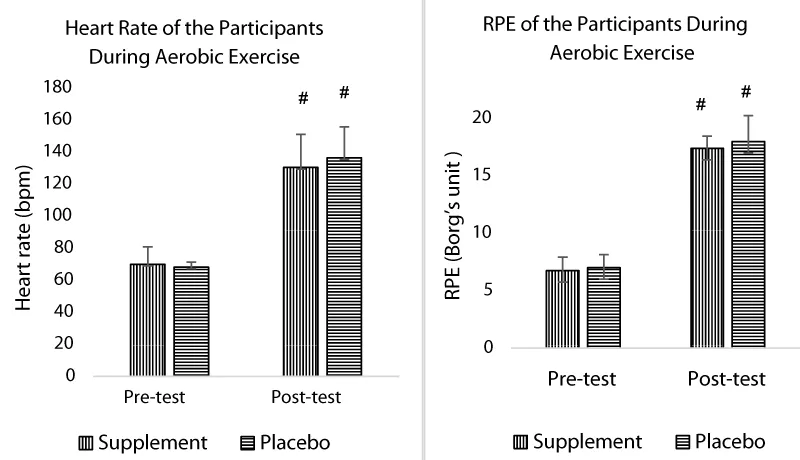
Figure 2: Heart rate and rate of perceived exertion of the participants during aerobic exercise in the supplement and placebo trials. Data is presented as mean ± SD. #denotes significant difference from respective pre-test values at p < 0.05.
The main finding of the present study was that supplementation with a combination of Lignosus rhinocerus and Eurycoma longifolia for six days, including a single dose taken one hour before the aerobic exercise test, did not produce significant improvements in aerobic exercise performance among young athletes. To the best of our knowledge, this is the first study to examine the potential synergistic effects of Lignosus rhinocerus and Eurycoma longifolia on aerobic exercise performance using a field-based running protocol in Malaysian young athletes. The present findings align with previous research reporting no ergogenic effects of these supplements on sport performance [13-16]. Zakaria, et al. [13] found that seven days of Lignosus rhinocerus supplementation (100 mg/day) did not significantly enhance peak force, peak power, countermovement jump height, drop jump reactive strength index (RSI) and perceived muscle soreness. Similarly, Chen, et al. [14] observed that Lignosus rhinocerus supplementation combined with resistance training failed to improve aerobic or anaerobic fitness, isokinetic strength, muscle power and immune markers in young men. Muhammad, et al. [15] also reported no significant improvements in endurance running after seven days of Eurycoma longifolia supplementation (150 mg/day). Likewise, Ooi, et al. [16] found no enhancement in endurance cycling when cyclists ingested an herbal drink containing Eurycoma longifolia during exercise.
Despite these consistent findings, several studies have reported contrasting results, suggesting that Eurycoma longifolia may enhance physical performance when supplemented over a longer duration [17,18]. Hamzah and Yusof [17], for instance, reported significant increases in muscular strength following five weeks of supplementation with 150 mg of Eurycoma longifolia in healthy male adults. Eurycoma longifolia contains bioactive quassinoids that have been associated with increased muscle strength, reduced anxiety and stress and potential improvements in overall physical performance [18]. These findings suggest that Eurycoma longifolia may exert more pronounced ergogenic effects in strength- and power-oriented activities rather than endurance-based performance, which relies more heavily on aerobic metabolism and cardiovascular efficiency.
Previous studies have also highlighted the antioxidant, anti-inflammatory, antihypertensive, and antimicrobial properties of both Lignosus rhinocerus and Eurycoma longifolia [3,18,19]. Tan, et al. [3] demonstrated that Lignosus rhinocerus supplementation improves respiratory health and immune function, which are potentially beneficial attributes for athletes engaged in prolonged aerobic activity. Eurycoma longifolia, on the other hand, contains glycoproteins and eurycomanone, compounds associated with anti-ageing effects and increased androgenic activity, including elevated testosterone levels. Testosterone plays a critical role in enhancing bone density, muscle strength and overall performance capacity [6,20]. It is well established that intense or prolonged exercise increases oxidative stress due to elevated production of free radicals, which can impair muscle contraction, accelerate fatigue, contribute to muscle damage and compromise sports performance [21]. Antioxidants are essential in neutralising these free radicals, thereby reducing oxidative damage, mitigating fatigue and potentially improving performance [8]. Many athletes consume antioxidant-rich supplements to reduce muscle soreness, prevent immune suppression and maintain optimal training quality [22]. Based on these physiological mechanisms, it was initially hypothesised that the antioxidant properties of Lignosus rhinocerus and Eurycoma longifolia would enhance aerobic exercise performance by reducing exercise-induced oxidative stress.
However, the present study did not support this hypothesis. The absence of significant improvements may be attributed to the short duration of supplementation, which may not have been sufficient to induce meaningful physiological adaptations or to accumulate the bioactive compounds required to exert measurable ergogenic effects. It is also possible that the dosage used, the training status of the athletes, or individual variability in supplement response influenced the outcomes. Therefore, future studies are recommended to employ longer supplementation periods and varied dosages to determine whether more robust and sustained physiological adaptations can improve aerobic exercise performance when using these supplements [23-28].
In conclusion, although Lignosus rhinocerus and Eurycoma longifolia are commonly promoted for their potential synergistic benefits on sports performance, the present study demonstrated that six days of daily supplementation together with a single pre-exercise dose taken one hour before the endurance running test did not produce any significant improvements in aerobic exercise performance, rate of perceived exertion and heart rate responses in young male athletes. These findings suggest that short-term supplementation with these herbal compounds is insufficient to elicit measurable ergogenic effects during aerobic exercise. Further research involving longer supplementation periods and different dosages is warranted to clarify their potential role in enhancing aerobic exercise performance among young male athletes.
The authors would like to express their sincere appreciation to the industry grant LPS2213 (Effect of Tiger Milk Mushroom and Long Jack Supplementation on Sports Performance) for providing the financial support that made this research possible. The authors also extend their gratitude to Universiti Malaysia Sabah for the facilities and institutional support, as well as to all participating athletes for their time, commitment, and cooperation throughout the study.
- Wong XK, Alasalvar C, Ng WJ, Ee KY, Lam MQ, Chang SK. Tiger Milk Mushroom: A Comprehensive Review of Nutritional Composition, Phytochemicals, Health Benefits, and Scientific Advancements with Emphasis on Chemometrics and Multi-Omics. Food Chemistry. 2024;459:140340. Available from: https://doi.org/10.1016/j.foodchem.2024.140340
- Nallathamby N, Phan CW, Seow SL, Baskaran A, Lakshmanan H, Abd Malek SN, et al. A status review of the bioactive activities of tiger milk mushroom Lignosus rhinocerotis (Cooke) Ryvarden. Frontiers in Pharmacology. 2018;8:998. Available from: https://doi.org/10.3389/fphar.2017.00998
- Tan ESS, Leo TK, Tan CK. Effect of tiger milk mushroom (Lignosus rhinocerus) supplementation on respiratory health, immunity and antioxidant status: an open-label prospective study. Scientific Reports. 2021;11(1):11781. Available from: https://doi.org/10.1038/s41598-021-91256-6
- Fung SY, Tan CS. The bioactivity of tiger milk mushroom: Malaysia’s prized medicinal mushroom. In: Medicinal Plants and Fungi: Recent Advances in Research and Development. 2017. p. 111–133. Available from: https://doi.org/10.1007/978-981-10-5978-0_5
- Bhat R, Karim AA. Tongkat Ali (Eurycoma longifolia Jack): A review on its ethnobotany and pharmacological importance. Fitoterapia. 2010;81(7):669–679. Available from: https://doi.org/10.1016/j.fitote.2010.04.006
- Rehman SU, Choe K, Yoo HH. Review on a traditional herbal medicine, Eurycoma longifolia Jack (Tongkat Ali): its traditional uses, chemistry, evidence-based pharmacology and toxicology. Molecules. 2016;21(3):331. Available from: https://doi.org/10.3390/molecules21030331
- Talbott SM, Talbott JA, George A, Pugh M. Effect of Tongkat Ali on stress hormones and psychological mood state in moderately stressed subjects. Journal of the International Society of Sports Nutrition. 2013;10(1):28. Available from: https://doi.org/10.1186/1550-2783-10-28
- Higgins MR, Izadi A, Kaviani M. Antioxidants and exercise performance: with a focus on Vitamin E and C supplementation. International Journal of Environmental Research and Public Health. 2020;17(22):8452. Available from: https://doi.org/10.3390/ijerph17228452
- Brauer P, Anielski P, Schwaiger S, Stuppner H, Tran TVA, Vollmer G, et al. In vitro metabolism of selected bioactive compounds of Eurycoma longifolia root extract to identify suitable markers in doping control. Drug Testing and Analysis. 2019;11(1):86–94. Available from: https://doi.org/10.1002/dta.2449
- Talbott S, Talbott J, Negrete J, Jones M, Nichols M, Roza J. Effect of Eurycoma longifolia extract on anabolic balance during endurance exercise. Journal of the International Society of Sports Nutrition. 2006;3(1):S32.
- Chen CK, Mohamad WM, Ooi FK, Ismail SB, Abdullah MR, George A. Supplementation of Eurycoma longifolia Jack extract for 6 weeks does not affect urinary testosterone: epitestosterone ratio, liver and renal functions in male recreational athletes. International Journal of Preventive Medicine. 2014;5(6):728–733. Available from: https://pubmed.ncbi.nlm.nih.gov/25013692/
- Harty PS, Zabriskie HA, Erickson JL, Molling PE, Kerksick CM, Jagim AR. Multi-ingredient pre-workout supplements, safety implications, and performance outcomes: a brief review. Journal of the International Society of Sports Nutrition. 2018;15(1):41. Available from: https://doi.org/10.1186/s12970-018-0247-6
- Zakaria AZ, Washif JA, Lim BH, Nosaka K. Effects of Eurycoma longifolia Jack supplementation on eccentric leg press exercise-induced muscle damage in rugby players. Biology of Sport. 2023;40(3):691–697. Available from: https://doi.org/10.5114/biolsport.2023.119290
- Chen CK, Hamdan NF, Ooi FK, Wan Abd Hamid WZ. Combined effects of Lignosus rhinocerotis supplementation and resistance training on isokinetic muscular strength and power, anaerobic and aerobic fitness level, and immune parameters in young males. International Journal of Preventive Medicine. 2016;7:107. Available from: https://doi.org/10.4103/2008-7802.190604
- Muhamad AS, Keong CC, Kiew OF, Abdullah MR, Lam CT. Effects of Eurycoma longifolia Jack supplementation on recreational athletes' endurance running capacity and physiological responses in the heat. International Journal of Applied Sports Science. 2010;22(2):1–19. Available from: https://doi.org/10.24985/ijass.2010.22.2.1
- Ooi FK, Singh R, Sirisinghe RG, Ang B, Jamalullail S. Effects of an herbal ergogenic drink on cycling performance in young cyclists. Malaysian Journal of Nutrition. 2001;7(1):33–40. Available from: https://pubmed.ncbi.nlm.nih.gov/22692427/
- Hamzah S, Yusof A. The ergogenic effects of Eurycoma longifolia Jack: a pilot study. British Journal of Sports Medicine. 2003;37:464–470. Available from: https://www.researchgate.net/publication/341998425_The_Ergogenic_Effect_of_Eurycoma_longifolia_Jack_A_Pilot_Study
- Khanijo T, Jiraungkoorskul W. Review the ergogenic effect of Long Jack, Eurycoma longifolia. Pharmacognosy Reviews. 2016;10(20):139–142. Available from: https://doi.org/10.4103/0973-7847.194041
- Yap HY, Aziz AA, Fung SY, Ng ST, Tan CS, Tan NH. Energy and nutritional composition of Tiger milk mushroom sclerotia and the antioxidant activity of its extracts. International Journal of Medical Sciences. 2014;11(6):602–607. Available from: https://doi.org/10.7150/ijms.8341
- Tambi MI, Imran MK, Henkel RR. Standardised water-soluble extract of Eurycoma longifolia, Tongkat Ali, as a testosterone booster for managing men with late-onset hypogonadism. Andrologia. 2012;44:226–230. Available from: https://doi.org/10.1111/j.1439-0272.2011.01168.x
- Simioni C, Zauli G, Martelli AM, Vitale M, Sacchetti G, Gonelli A, et al. Oxidative stress: role of physical exercise and antioxidant nutraceuticals in adulthood and ageing. Oncotarget. 2018;9(24):17181–17198. Available from: https://doi.org/10.18632/oncotarget.24729
- Braakhuis AJ, Hopkins WG. Impact of dietary antioxidants on sport performance: a review. Sports Medicine. 2015;45(7):939–955. Available from: https://doi.org/10.1007/s40279-015-0323-x
- Chen CK, Muhamad AS, Ooi FK. Herbs in exercise and sports. Journal of Physiological Anthropology. 2012;31(1):4. Available from: https://doi.org/10.1186/1880-6805-31-4
- Handelsman DJ, Hirschberg AL, Bermon S. Circulating testosterone as the hormonal basis of sex differences in athletic performance. Endocrine Reviews. 2018;39(5):803–829. Available from: https://doi.org/10.1210/er.2018-00020
- Henkel RR, Wang R, Bassett SH, Chen T, Liu N, Zhu Y, et al. Tongkat Ali as a potential herbal supplement for physically active male and female seniors—a pilot study. Phytotherapy Research. 2014;28(4):544–550. Available from: https://doi.org/10.1002/ptr.5017
- Kraemer WJ, Ratamess NA. Hormonal responses and adaptations to resistance exercise and training. Sports Medicine. 2005;35:339–361. Available from: https://doi.org/10.2165/00007256-200535040-00004
- Lau BF, Abdullah N, Aminudin N. Chemical composition of the Tiger’s Milk Mushroom, Lignosus rhinocerotis (Cooke) Ryvarden, from different developmental stages. Journal of Agricultural and Food Chemistry. 2013;61(20):4890–4897. Available from: https://doi.org/10.1021/jf4002507
- Shuid AN, Siang LK, Chin TG, Muhammad N, Mohamed N, Soelaiman IN. Acute and subacute toxicity studies of Eurycoma longifolia in male rats. International Journal of Pharmacology. 2011;7(5):641–646. Available from: https://scialert.net/abstract/?doi=ijp.2011.641.646